

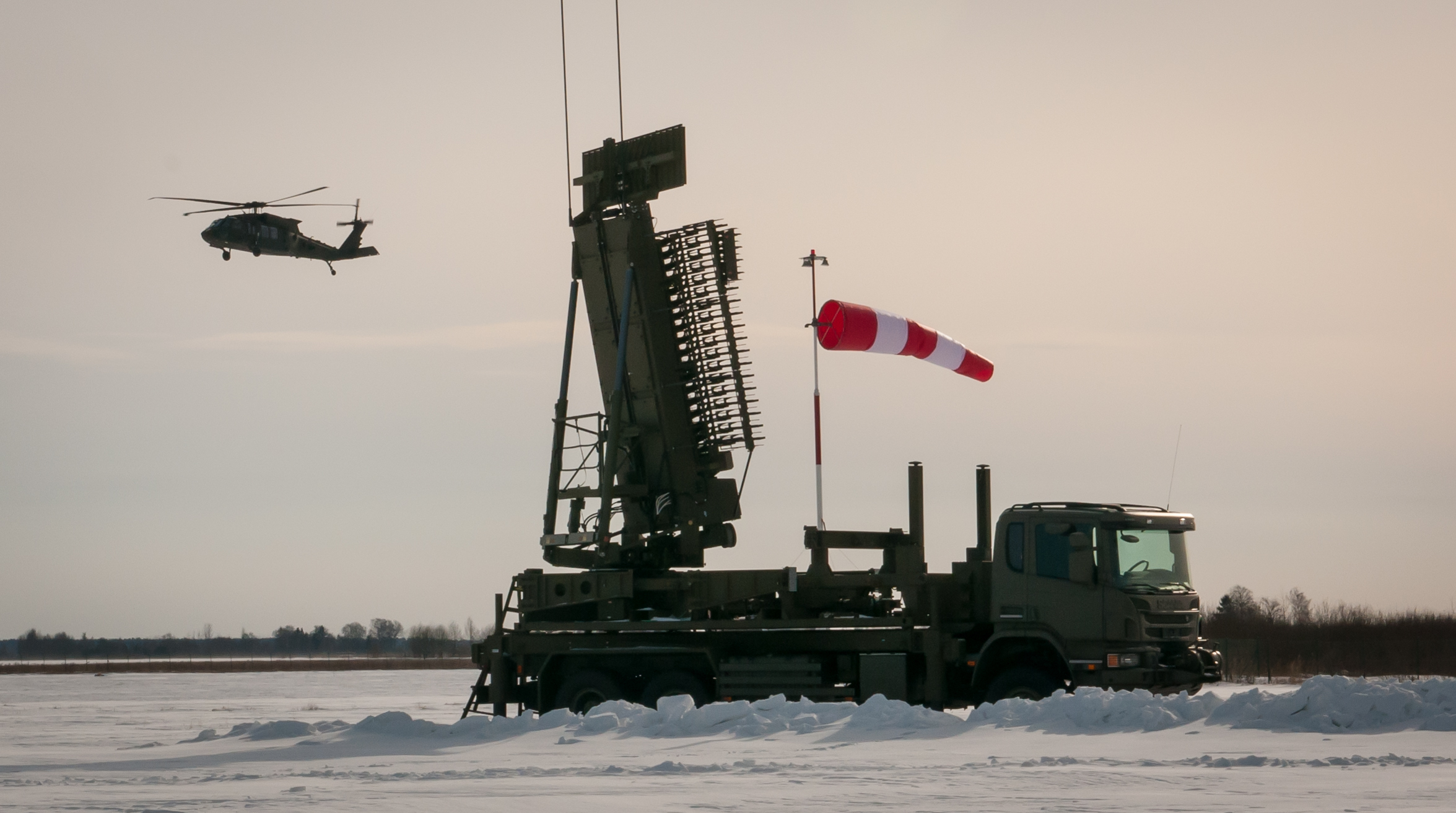
The U.S. Army has reported that it has worked with the Virginia Polytechnic Institute and State University on machine learning algorithms to improve military radar systems.
According to a recent service news release, researchers from the U.S. Army Combat Capabilities Development Command, now known as DEVCOM, developed an automatic way for radars to seamlessly operate in congested and limited spectrum environments created by commercial 4G LTE and future 5G communications systems.
“Future implementations of this algorithm into Army legacy and developmental radars will provide unprecedented spectrum dominance for Soldiers,” said Army researcher Dr. Anthony Martone. “This will enable Soldiers to use their radars for problems such as tracking incoming targets while mitigating interference to maximize target detection range.”
The researchers examined how future DOD radar systems will share the spectrum with commercial communications systems. The team used machine learning to learn the behavior of ever-changing interference in the spectrum and find clean spectrum to maximize the radar performance. Once clean spectrum is identified, waveforms can be modified to best fit into the spectrum.
This research is part of a larger defense program to implement adaptive signal processing and machine learning algorithms onto software-defined radar platforms for autonomous real-time behavior.
“With development of this algorithm, this capability is fast-tracking from a concept to a Defense program of record in less than eight years,” Martone said. “This is a notably expedited cycle compared to the more typical 30-year cycle, which will more quickly provide secure communications for Soldiers.”
The team is leading future research and development efforts to make cognitive radar possible and sharing new research areas within the radar community, with the intent to continue development using more advanced software-defined radar platforms.
Also noted that the team published its research, Deep Reinforcement Learning Control for Radar Detection and Tracking in Congested Spectral Environments, in the peer-reviewed journal, IEEE Transactions on Cognitive Communications and Networking.