


The U.S. Army has provided another update on the plan to extend the firing range of the current Army Tactical Missile System, or ATACMS, by more than 500 kilometers.
Currently, the U.S. Army has invested more than $1 Billion for developing and test next-generation, long-range precision-strike missile designed for the Precision Strike Missile (PrSM) program. The new system is designing to counteract the possible threat in Eastern Europe and in the whole world, including defeating enemy warships.
Brig. Gen. John Rafferty, director of the Long-Range Precision Fires Cross-Functional Team said the Army expects to field the Precision Strike Missile in 2023, and integrate Spiral One into the force by 2025.
“We’ve got our eyes wide open on the development of this program,” Rafferty said. “And so on our [CFT], we have a small intelligence and targeting team. And one of their primary functions is to make sure that in our approach to developing weapon systems that we have the right targets in mind. And we do that through a very open and routine dialogue with our Army service component commanders in Europe and the Pacific.”
The next-generation precision-strike surface-to-surface weapon system will deliver enhanced capabilities for attacking, neutralizing, suppressing and destroying targets at depth on the battlefield and give field artillery units a new long-range capability while supporting brigade, division, corps, Army, theater, Joint and Coalition forces.
The Army identified PrSM as a priority and has accelerated the missile’s acquisition schedule to provide an early capability in fiscal year 2023.
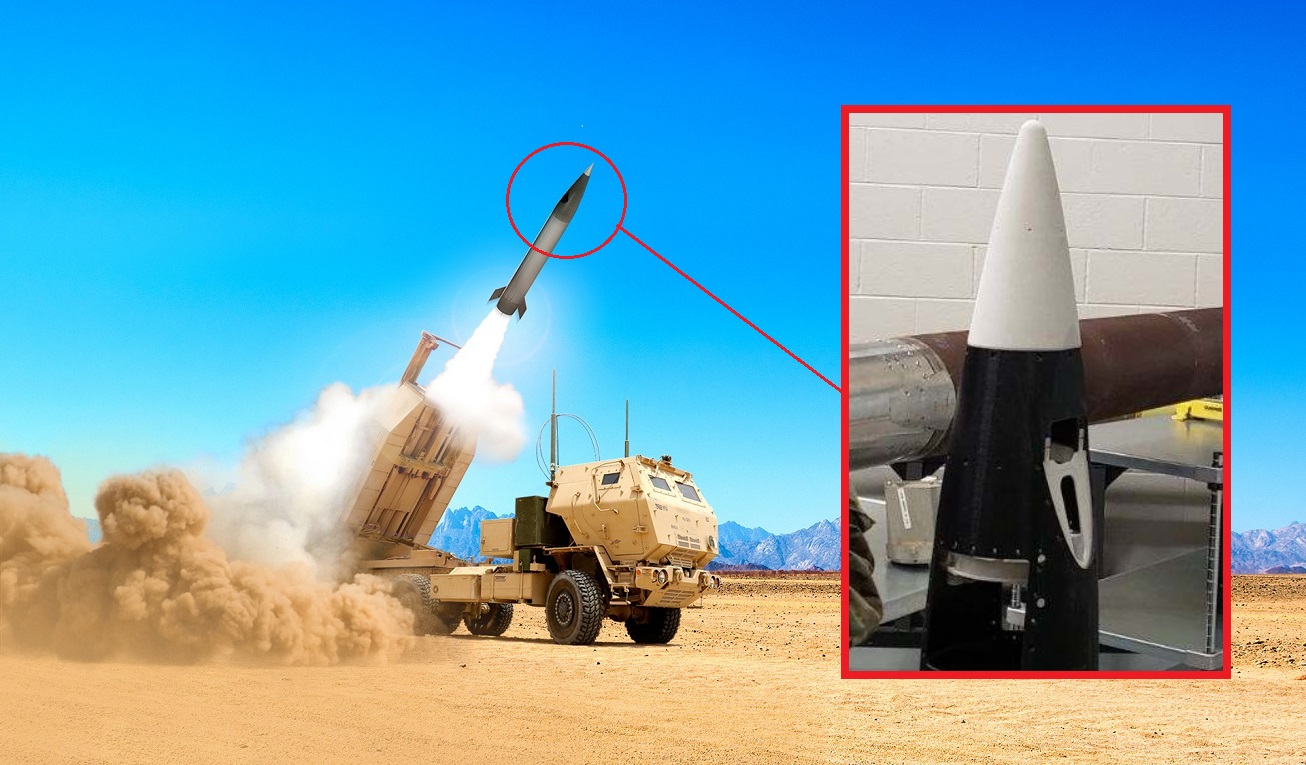
Furthermore, the Army already has successfully completed its first open-air testing of an advanced multi-mode seeker, an upgrade to the PrSM.
The Army News Service has reported that during a two-day test period June 2-3 at Redstone Arsenal, Alabama, research teams operated the seeker at 50 percent capacity while tracking moving targets. The seeker was designed to allow an upgraded “Spiral One” missile to acquire targets on both land and sea.
Scientists mounted the seeker on a pod, which was placed under the wing of an aircraft. Then the research team had the aircraft flown over the testing range at Redstone to track the radio waves of moving targets.
The multi-mode seeker was developed from the Land-Based Anti-Ship Missile program that began in 2015 to help the Army target enemy ships with its long-range precision fires capability. However, the Army soon realized the seeker not only had the ability to track the radio signals of moving ships, but also land-based targets such as communications vans and the mobile radars of anti-aircraft defenses.
The capability gives the Army the means to succeed in a difficult anti-access, aerial-denial environment, officials said. The use of multiple sensors also increases the ability to locate targets even without good coordinates.