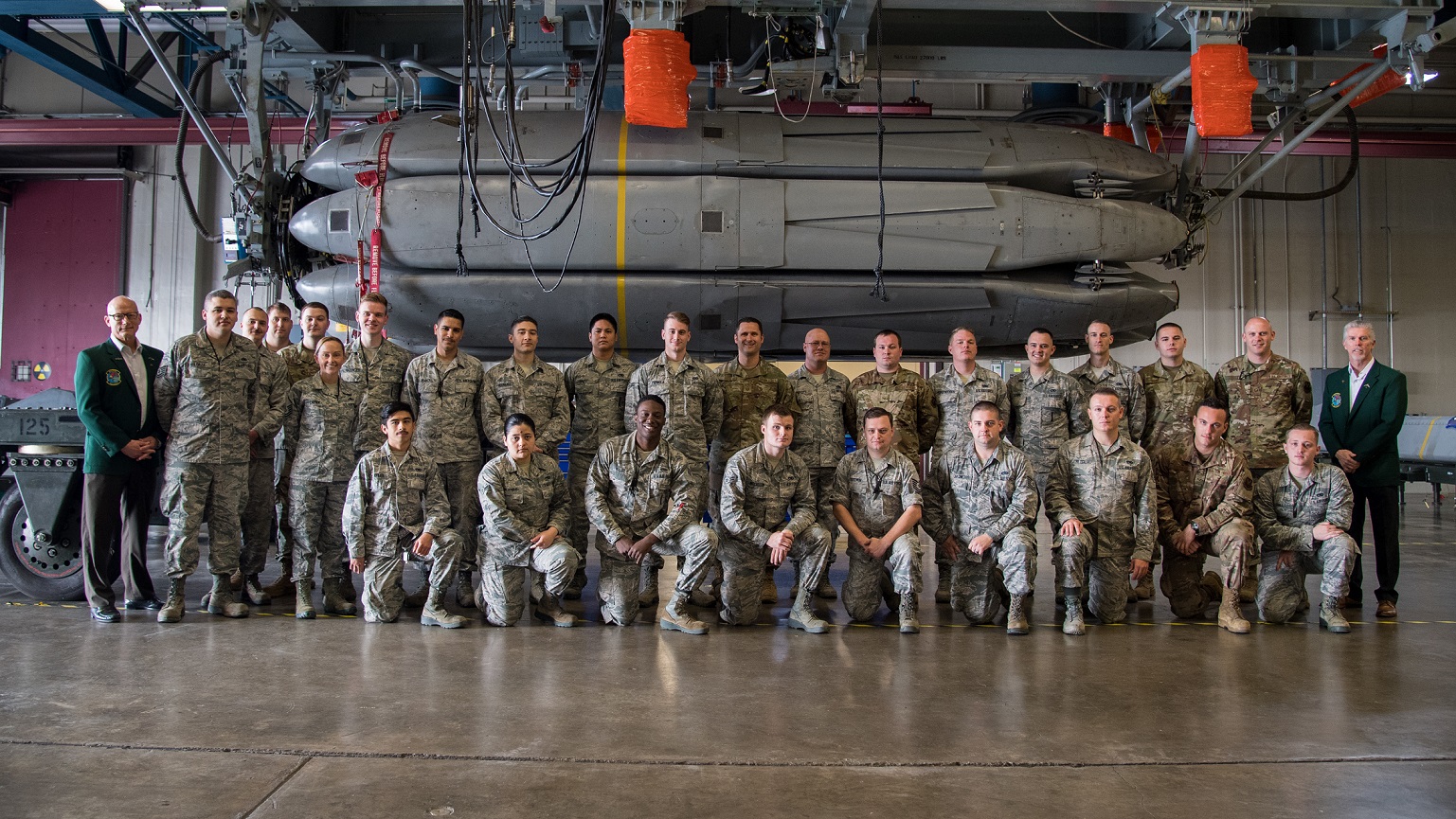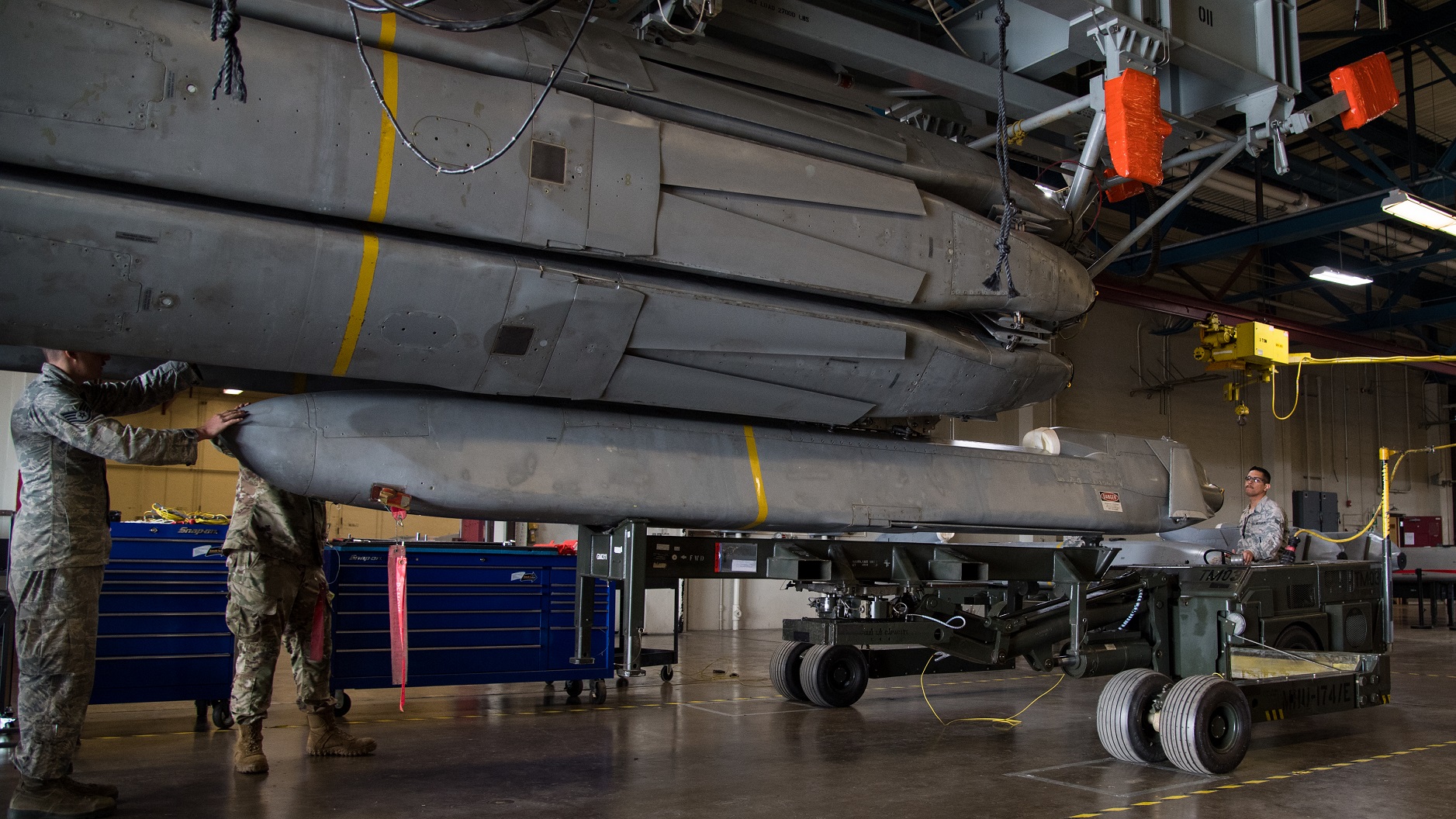
The U.S. Air Force retired an integral component of the United States’ long-range strategic bombing capabilities – the final Conventional Air-Launched Cruise Missile (CALCM) package.
The CALCM missile package is retired at Barksdale Air Force Base, La., Nov. 20, 2019.
Initially beginning design in 1974, the CALCM missile has been employed in combat operations to include Desert Storm, Desert Strike, Desert Fox, Allied Force, Enduring Freedom and Iraqi Freedom. Decades later, the final missile package was disassembled to become demilitarized.
“It’s incredible to see the tail end of a weapons system come full circle,” Tech. Sgt. Carlos Solorza, 2nd Munitions Squadron weapons system bay chief said during the final upload of the CALCM weapon system. “I don’t think I’ll ever be apart of another weapon retirement and the fact that I’m here right now is pretty special.”
The CALCM missile is a small, winged missile powered by a turbofan jet engine, able to fly complicated routes through terrain with the guidance of a GPS aided inertial navigation system.
“I’ve loaded this weapon system well over 300 times,” said retired Chief Master Sgt. Paul LaFlame, former weapons superintendent at Barksdale. “This has been the primary weapon system on the B-52 for decades now.”
Although missile design began in the mid-1970s, CALCM wasn’t employed in combat until January of 1991, during Operation Secret Squirrel, a mission in which seven B-52G Stratofortresses took off from Barksdale toward Iraqi targets, launching 35 CALCM missiles.
Opening the first strikes of Operation Desert Storm, the then-new CALCM missiles devastated Saddam Hussein’s forces and marked the first time GPS has been used to guide a missile to a target.
Former members of the mission, retired Cols. Trey Morriss and Warren Ward alongside LaFlame were in attendance for the final download of the last CALCM missiles.
“It’s awesome to see these young Airmen, it makes me feel young,” said Ward. “It’s always great to interact with young troops, they’re phenomenal. It’s great to see the Air Force still moving along seamlessly, with great people who still get the job done,” LaFlame added.
The CALCM weapon system is to be replaced over time as more advanced Long-Range, Stand-Off (LRSO) weapons enter the active stockpile.