

U.S. Marines demonstrate NATO logistics integration in Bulgaria

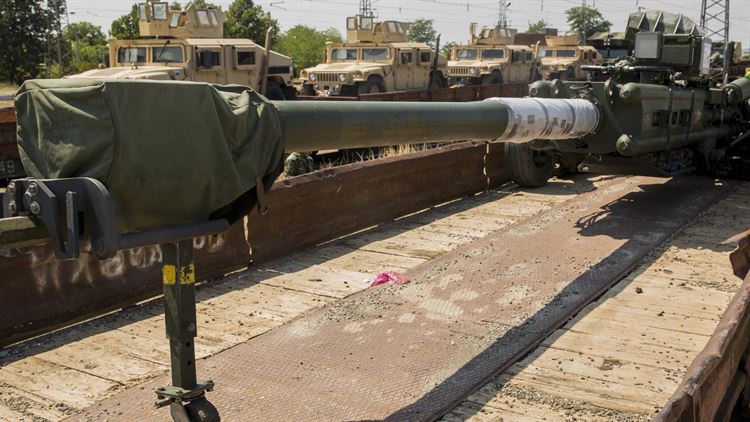
Marines alongside Bulgarian counterparts loaded heavy equipment onto the Bulgarian rail system, here, for transport to Tbilisi, Georgia, for an upcoming regional exercise.

That was reported by marines.mil.

“We chose to move the equipment by rail for the combined arms company because we have to get it to the port city which is quite a distance from our current location,” said Master Sgt. Jason Pittsely, the Combined Arms Company Operations Chief. “It is the quickest and the easiest method to move all of our equipment in one movement.”

The Marines and Bulgarian rail workers successfully loaded tanks, Humvees, seven-ton vehicles, amphibious assault vehicles and artillery cannons onto the train for Exercise Agile Spirit 2016. The process demonstrated the logistics integration among allies capable of transporting equipment in support of operations throughout the Black Sea region.

- ADVERTISEMENT - CONTINUE READING BELOW -

“It’s actually been moving pretty efficiently with the help of the Bulgarians,” said Lance Cpl. Nancy Johnson, the unit’s embarkation chief. “Working with them makes it a lot easier because they know what they are doing. We have gotten everything on in a timely manner.”

The rail system will take the equipment, along with a small group of Marine passengers, to the port city where the equipment will be moved across the Black Sea via ferry boat.

“So this type of movement saves the Marine Corps time and money,” said Pittsely. “One, we move our equipment all in one movement and two, we don’t have to send security with each one of our vehicles or pieces of equipment as it moves across a couple of different countries to get to its end state and we also don’t have to have Marines riding with each one of those pieces of equipment so it keeps our unit together.”

Agile Spirit is a multi-national operation focused on enhancing the participating nations’ abilities to conduct joint conventional operations and combined arms integration at the battalion level. The exercise will improve collective military capabilities and enhance professional relationships with allies and partner militaries during a crisis.

Black Sea Rotational Force is an annual multilateral security cooperation activity between the U.S. Marine Corps and partner nations in the Black Sea, Balkan and Caucasus regions designed to enhance participants’ collective professional military capacity, promote regional stability and build enduring relationships with partner nations.
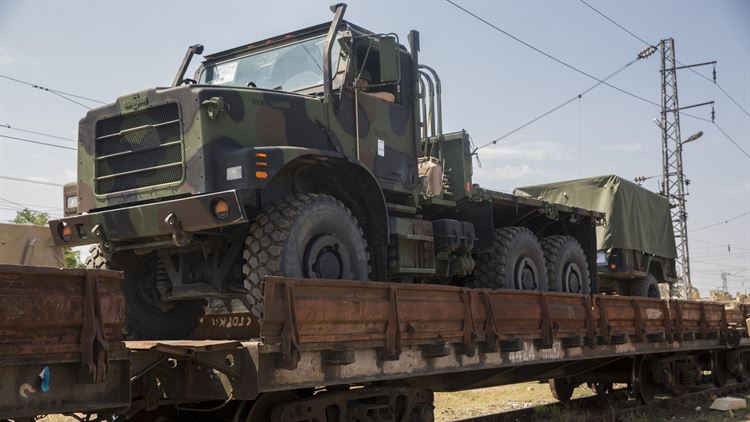
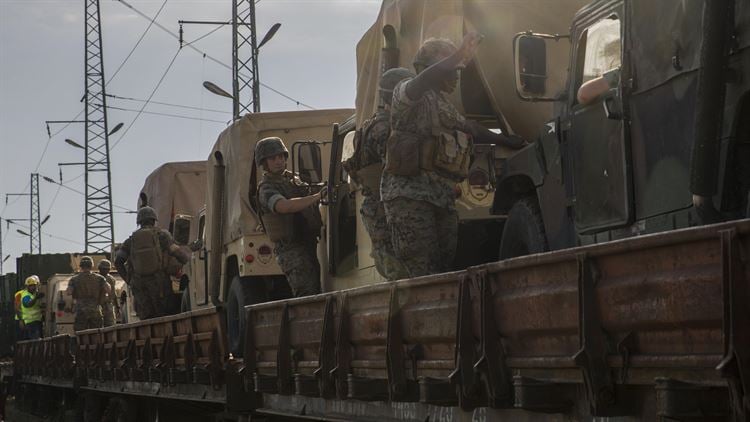
Photo By: Sgt. Michelle Reif

Readers who wish to follow our weekly coverage can subscribe to the Weekly Defense Roundup.

If you wish to report a grammatical or factual error in this article, please let us know by using the online form.

Executive Editor

Support The Defence Blog

Independent reporting takes resources. Join us on Patreon.

Become a patron

More Like This

U.S. Army’s top official tested laser-armed vehicle in New Mexico

The U.S. Army's top civilian official sat down at the operator's seat of a laser-armed pickup truck at White Sands Missile Range in New...

San Francisco startup’s hydrofoil boat wows U.S. Navy brass

A San Francisco-based maritime technology company's hydrofoiling electric boat stopped senior U.S. Navy admirals and captains in their tracks at the Sea-Air-Space conference, drawing...

Neros Technologies shrinks its attack drone controller by half

A Los Angeles-based drone technology company has redesigned its ground control station for FPV attack drones to fit on a soldier's body armor, cutting...

U.S. Army tests British-made interceptor to beat drones

The U.S. Army's 52nd Air Defense Artillery Brigade has tested a new low-cost interceptor called Skyhammer in Europe, putting Cambridge Aerospace's system through developmental...

U.S. Army invests $461M to rebuild short-range air defense fast

The U.S. Army is nearly doubling its investment in its primary short-range air defense system for fiscal year 2027, requesting $461 million for the...

DARPA wants to replace GPS dependence with new class of sensors

Every GPS signal on the battlefield is a vulnerability waiting to be exploited, and Russia, China, and Iran have all demonstrated the willingness to...