

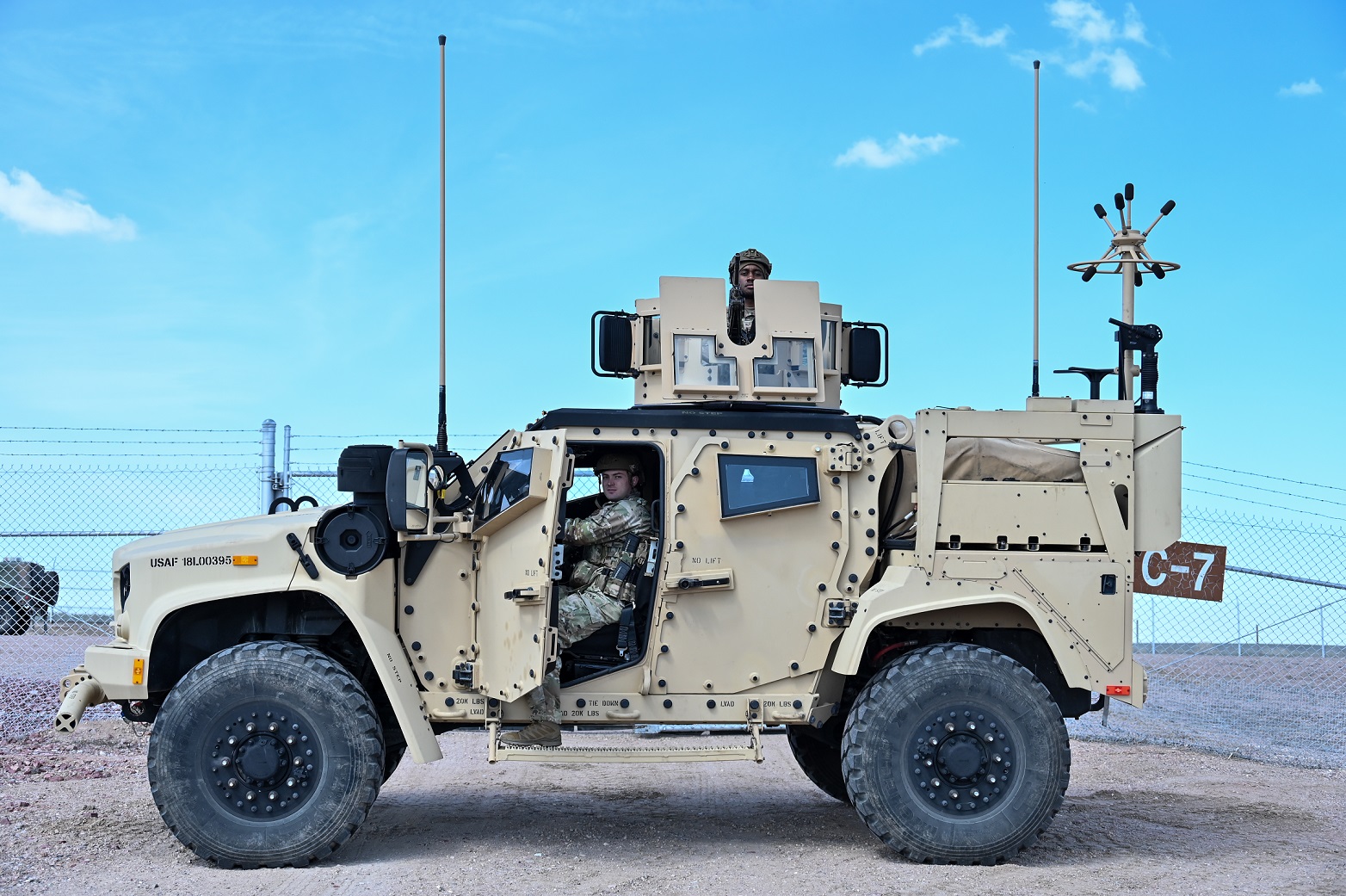
The U.S. Air Force has announced modernizing the security forces vehicle fleet to protect the nuclear arsenal.
The Air Force said in a release that defenders from the 90th Missile Security Forces Squadron conducted the first operational mission with the Joint Light Tactical Vehicle, better known as JLTV, supporting launch facility maintenance near Harrisburg, Nebraska, April 24, 2023.
As noted by the release, this is the first step in modernizing the security forces vehicle fleet to provide more lethality and security for the nuclear enterprise.
“It is built like a tank,” Senior Airman Zion Hill, 90th MSFS maintenance support team said. “When you climb into the Humvee, you are stepping back in time 20 years. The JLTV is like driving the Batmobile into the future to better defend our nation.”
The JLTV is a new armored truck that is set to replace the aging Up-Armored High Mobility Multipurpose Wheeled Vehicle, commonly known as the Humvee. This is part of AFGSC’s efforts to modernize and enhance defenders’ capabilities and better protect one of the nation’s most critical assets, its nuclear arsenal.
“The JLTV is an extremely robust and versatile vehicle, offering improved point of view, responsive suspension systems, increased power and modern safety features,” said Lt. Col. William Brokaw, 90th MSFS commander. “Many of the defenders who will operate the vehicle, were born after the (Humvee) entered service and are anxious to take advantage of all the new capabilities.”
The JLTV is a step forward in terms of safety and protection. However, Brokaw emphasized that the JLTV is a complex vehicle and requires investment in training to ensure operators’ safety and skills. Every operator must complete 40 hours of training, both classroom and hands-on familiarization and driving.
The vehicle is manufactured by Oshkosh Defense.
A large number of Airmen are already trained, and once the truck is released for general use, it’s expected to be moving across the complex within a matter of weeks.
First Lt. Joseph Struzik, 90th Missile Security Operations Squadron officer in charge of logistics and sustainment, shared his first impressions between the Humvee and the JLTV.
“It is a night and day difference. When you climb inside a Humvee you are walking into a historical box,” he said. “You will see old analog gauges, a classic steering wheel, a center console with a radio. Whereas the JLTV gives defenders a better tool to perform their nuclear security duties.”
Humvee drivers adjust to the vehicle, while the JLTV adjusts to the driver, according to Struzik.
As the JLTV is rolled out across the U.S. military, it will help Airmen fit into any joint operations of the future, Brokaw said.