

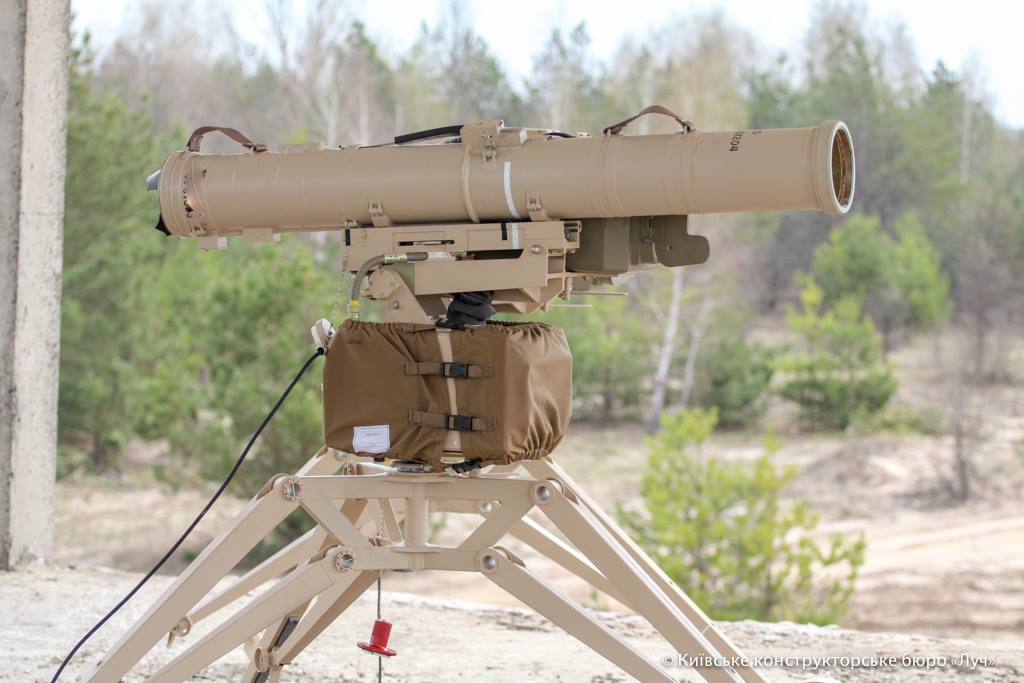
Ukrainian State Design Bureau ‘Luch’ from Kyiv successfully test fired its advanced SKIF portable anti-tank guided missile.
On 18 April, the Luch’s press service said in a statement that an advanced version of SKIF anti-tank guided missile (export version of the STUGNA-P developed for Ukrainian army) was successfully test-fired.
According to Luch, the new version of the SKIF portable anti-tank guided missile system has undergone a series of changes and improvements according to the requirements of the potential customer. Major changes were made for use launchers of the anti-tank guided missile system in conditions of soft soils and sand.
Also, SKIF shall be equipped with new thermal sight, is designed for detection, recognition and identification of threats at longer ranges during day-night and adverse weather conditions. The missile itself has not changed since it was originally designed for use in all climatic and weather conditions, without exception.
More: China promotes new anti-tank missile carrier for Iraqi Armed Forces
The SKIF anti-tank guided missile system is designed to engage main battle tanks fitted with explosive reactive armor, lightly armored vehicles, fortifications, hovering helicopters, pinpoint surface targets in any weather, day or night, and in electronic and optical countermeasures environments.
More: Expert: Russian tanks helpless against US-made Javelin anti-tank missiles
For transportation of the SKIF system and ease of use by the crew, the launcher is folded into a compact travelling position, with its thermal sight placed in a pack device, and is delivered to the action zone by any mode of transport.
Representatives from developer companies, potential customer countries and the Ukrainian military, were present during the tests.
Commander of the Ukrainian Ground Forces, Colonel General Serhiy Popko, highly praised the modernization of the anti-tank complex, manufactured by State Kyiv Design Bureau Luch.
“The customization of a regular anti-tank complex, by a powerful infrared thermal imager camera, allows to strike the enemy’s armored equipment in conditions of difficult visibility and at night. This development confirms that Ukraine has extremely high scientific potential, which makes it possible to produce armament and military equipment at the level of the world’s leading countries,” Popko said.


