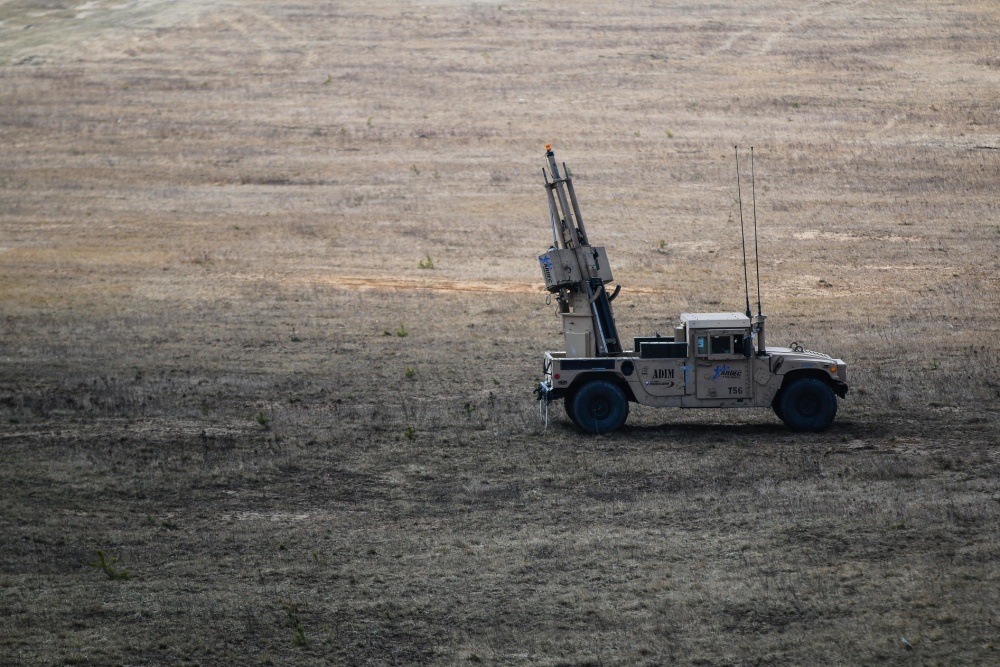
U.S. Army or rather U.S. Soldiers assigned to the 2nd Armored Brigade Combat Team, 1st Infantry Division have showcased an automated mortar system during a multinational joint equipment training exercise with the U.S. military at Grafenwoehr Training Area, Germany, as part of a Robotic Complex Breach Concept demonstration.
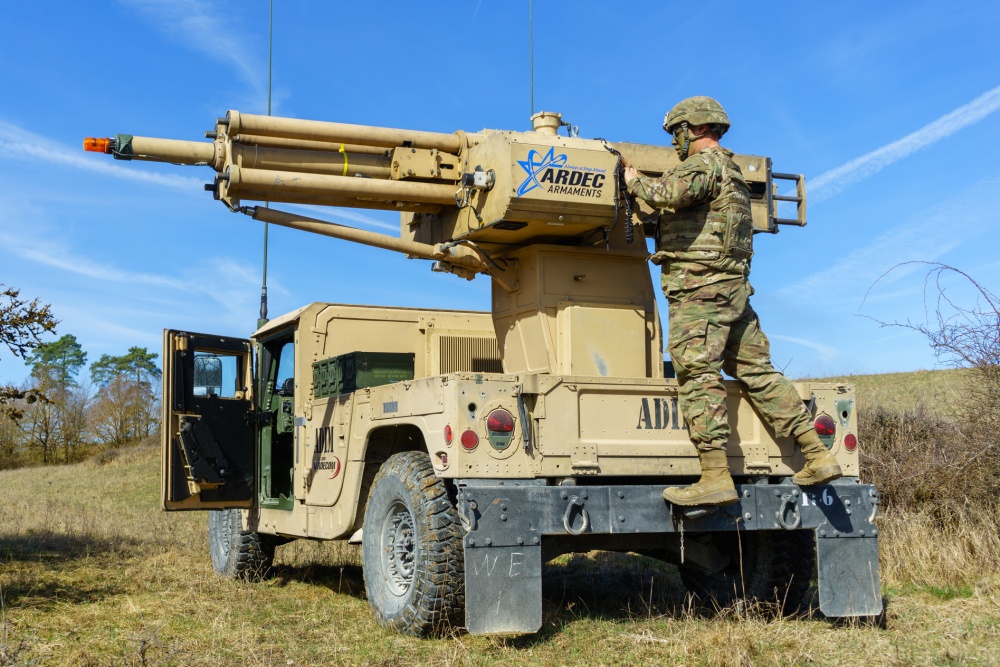
According to the 22nd Mobile Public Affairs Detachment, a U.S. Soldiers simulates loading a vehicle-mounted automated mortar system during a Robotic Complex Breach Concept assessment and demonstration, at Grafenwoehr, Germany, April 6, 2018.
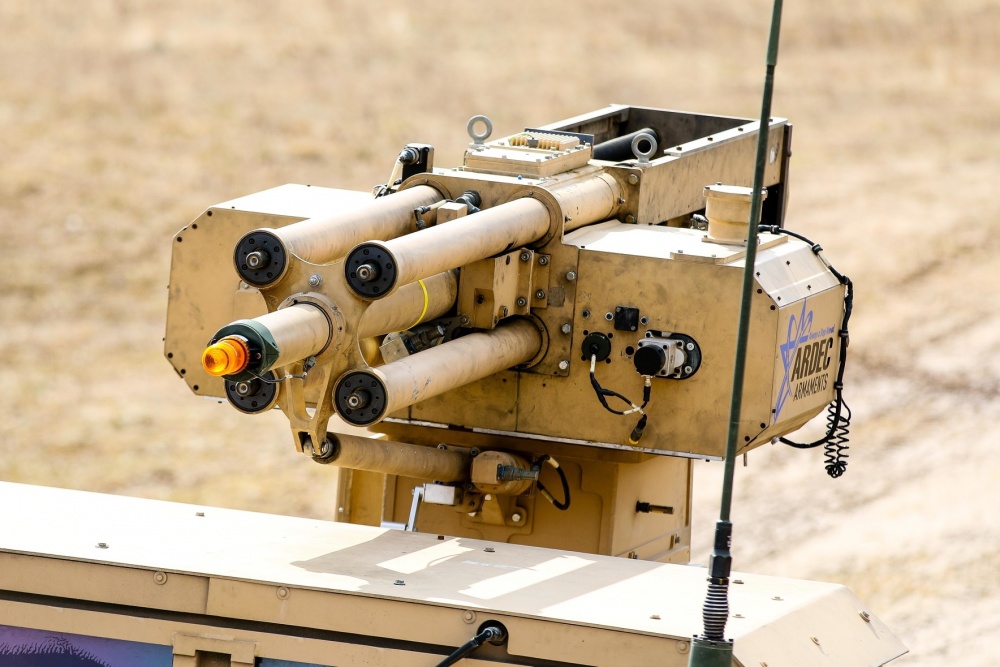
The 81mm automated mortar system called the Automated Direct Indirect-fire Mortar (ADIM), mounted on HMMWV (High Mobility Multipurpose Wheeled Vehicle) light tactical vehicle.
The ADIM uses “soft recoil” to reduce the firing loads transmitted to the platform by a factor of eight, well within the limits of the HMMWV (or other light tactical vehicles) capacity. This enables mounted firing and supports rapid mobile operations.

ADIM functions are automated so that operations normally conducted manually by the Soldier can instead be executed via electro-mechanical actuators controlled by the weapon Actuator Control System (ACS), which was also developed by Picatinny engineers and is a government owned technology.
ACS operation is directed by the Automated Fire Control System — Mortar (AFCS-M) which is an enhanced version of the fielded M95 Mortar Fire Control System (MFCS).
The AFCS-M provides the human interface for controlling the loading/unloading, emplacing, aiming and firing of the ADIM.
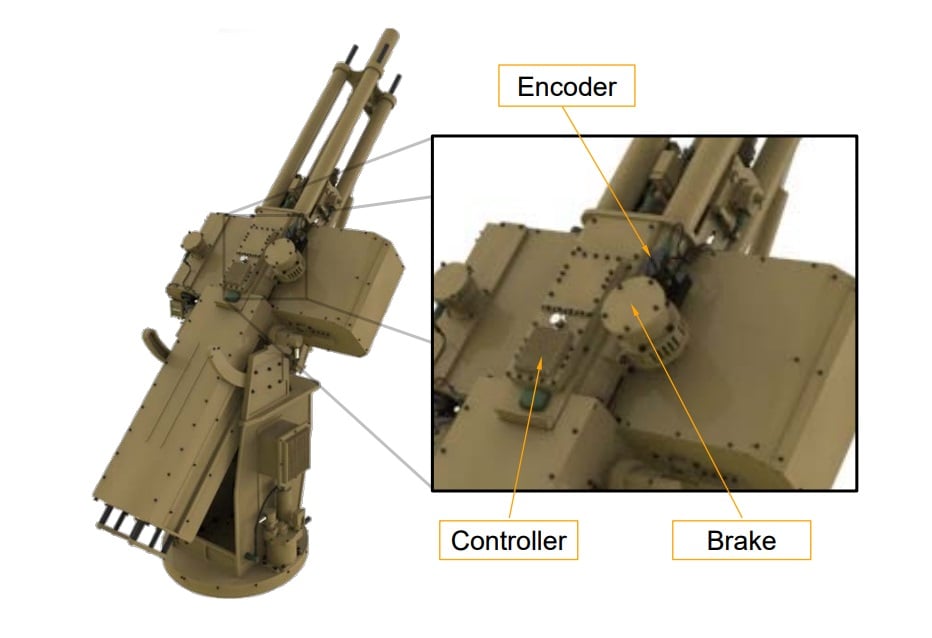
The mortar system weighs ~1 tonne (~2300 lbs.). The mortar elevates from -3° to 85° and can engage targets up to 6,3 km away. The fire control system incorporates an automatic laying capability, ballistic computation that includes a feed from the onboard meteorological sensor, and overall weapon management.
The revolutionary mortar system was used during the first Robotic and Autonomous Systems (RAS) engineer breach and provided mobile mortar capabilities and more lethality to the Warfighter in the battlefield.