

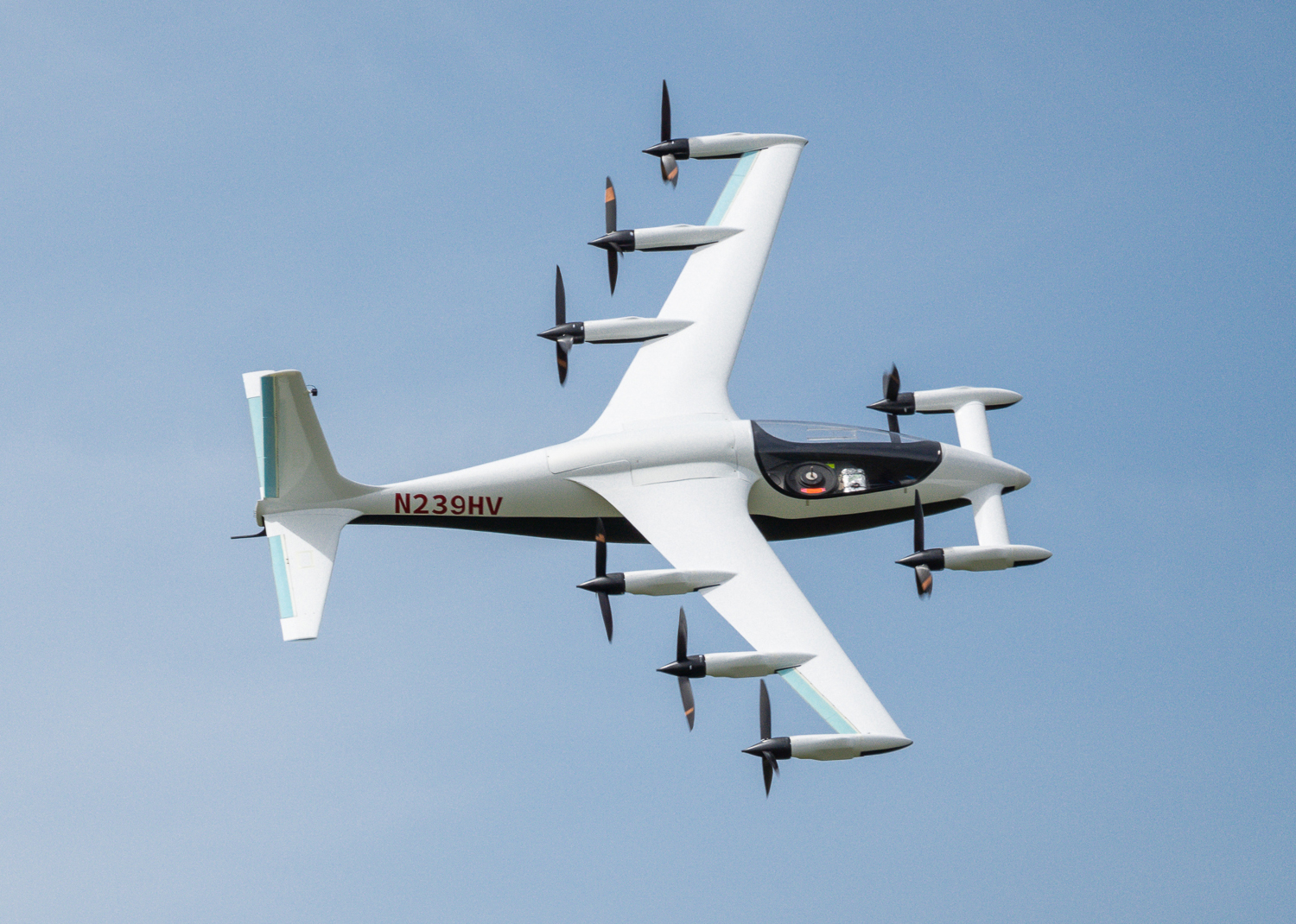
The U.S. Air Force is evaluating the use of electric vertical takeoff and landing, or eVTOL, aircraft for missions like medical evacuations (medevac) and search and rescue.
Officials of the Air Force Research Lab, reported that AFWERX Agility Prime and California-based company Kitty Hawk reached a milestone in May with their first operational exercise.
“This exercise produced important data that will bolster the program going forward,” said Lt. Col. Martin Salinas, the mission design team lead in the Air Force Operational Test and Evaluation Center.
The technology and companies in the AFWERX Agility Prime program continue to mature rapidly with a new partner Kitty Hawk joining the government/industry team. In the program’s first exercise, a diverse group of industry and government operators, engineers, and test professionals assessed the ability to do medical evacuation, personnel recovery, and logistics with Kitty Hawk’s eVTOL aircraft. The Kitty Hawk team also demonstrated Heaviside’s remote flying capabilities.
The multi-disciplinary team gathered a rich catalogue of data to inform dual-use utility at the prototype stage that will inform future developmental and fielding decisions. Besides assessing different loading scenarios, the team also observed demonstrations of remotely piloted and fully autonomous flights with Heaviside.
“The world is going to need new modes of transportation and Heaviside is one path to getting us there,” said Sebastian Thrun, Kitty Hawk CEO. “We are excited to be working with Agility Prime and look forward to our continued collaboration as we bring eVTOLs to more people.”

Founded in 2010 and based in California, Kitty Hawk, has developed numerous eVTOL vehicles including the Heaviside vehicle, named after the English engineer, Oliver Heaviside. Designed to be fast, small, quiet and green, the aircraft flies at up to 180 mph with a potential range of 100 miles plus reserves on a single charge, according to Kitty Hawk’s website. Heaviside takes off and lands in a 30×30 foot space, reaches sound levels of 38 dBA at 1,000 feet, is 100x quieter than a helicopter and requires less than half the energy per mile of a conventional electric car.
“The Agility Prime and Kitty Hawk teams facilitated the convergence of Air Force and Marine Corps testers and operators to engage with Heaviside, all while experimenting within the context of Personnel Recovery and logistics use-case scenarios,” Salinas said.
Salinas attributed the success of the California tests to the eagerness of those involved. “Pushing experimental tests in an operational context is challenging and exciting,” he said.
Col. Don Haley, Air Education and Training Command Detachment 62 commander, who leads a team in developing training syllabi for these new electric aircraft, noted, “this collaborative commercial/DoD use-case exploration revealed common attributes that serve both urban air mobility and search and rescue operations: High-reliability, responsive launch & recovery, minimal logistical footprint, accessibility for mobility-challenged, low acoustic signature, and high levels of autonomy.”
“We are pleased to welcome a new partner and happy about the progress in this first Agility Prime exercise,” said Col. Nathan Diller, AFWERX Director. “This is just the beginning of many examples that the team will be exploring in the coming months to partner with commercial companies in a way that accelerates maturity for commercialization, while providing the Department of the Air Force with decision-quality data for future force design.”