

- Karlas and Emmas Knits of Brooklyn won a maximum $763 million IDIQ contract to supply physical fitness gear to all six U.S. military branches through April 2031.
- The competitive award was made by Defense Logistics Agency Troop Support in Philadelphia, with five offers received and additional vendors expected under the same solicitation.
A small Brooklyn knitwear company just landed one of the biggest apparel contracts the Pentagon has put on the table this year. Karlas and Emmas Knits LLC, based in Brooklyn, New York, has been awarded a maximum $763 million contract to supply physical fitness gear to every branch of the U.S. military.
The contract runs on a five-year base period with one five-year option period, giving it a potential lifespan stretching to April 21, 2031 — and beyond if the option is exercised. Customers include the Army, Navy, Air Force, Marine Corps, Space Force, and Coast Guard. Five companies competed for the award, and Karlas and Emmas Knits was not the only winner — the Pentagon explicitly stated that additional contracts are expected to be awarded under the same solicitation, SPE1C1-25-R-0130, with awardees competing against each other for a portion of the maximum dollar value. Funding comes from fiscal 2026 through 2031 defense working capital funds.
That structure is worth understanding. The $763 million ceiling is not a guaranteed payout — it’s the upper limit of what Karlas and Emmas Knits could earn across the life of the contract if delivery orders flow its way. Under an IDIQ arrangement, the government commits to buying a minimum guaranteed amount but then issues individual orders as demand materializes. Because multiple vendors hold contracts under the same solicitation, each order is subject to further competition among the pool. The result is a system designed to keep prices competitive while maintaining a ready roster of pre-qualified suppliers.
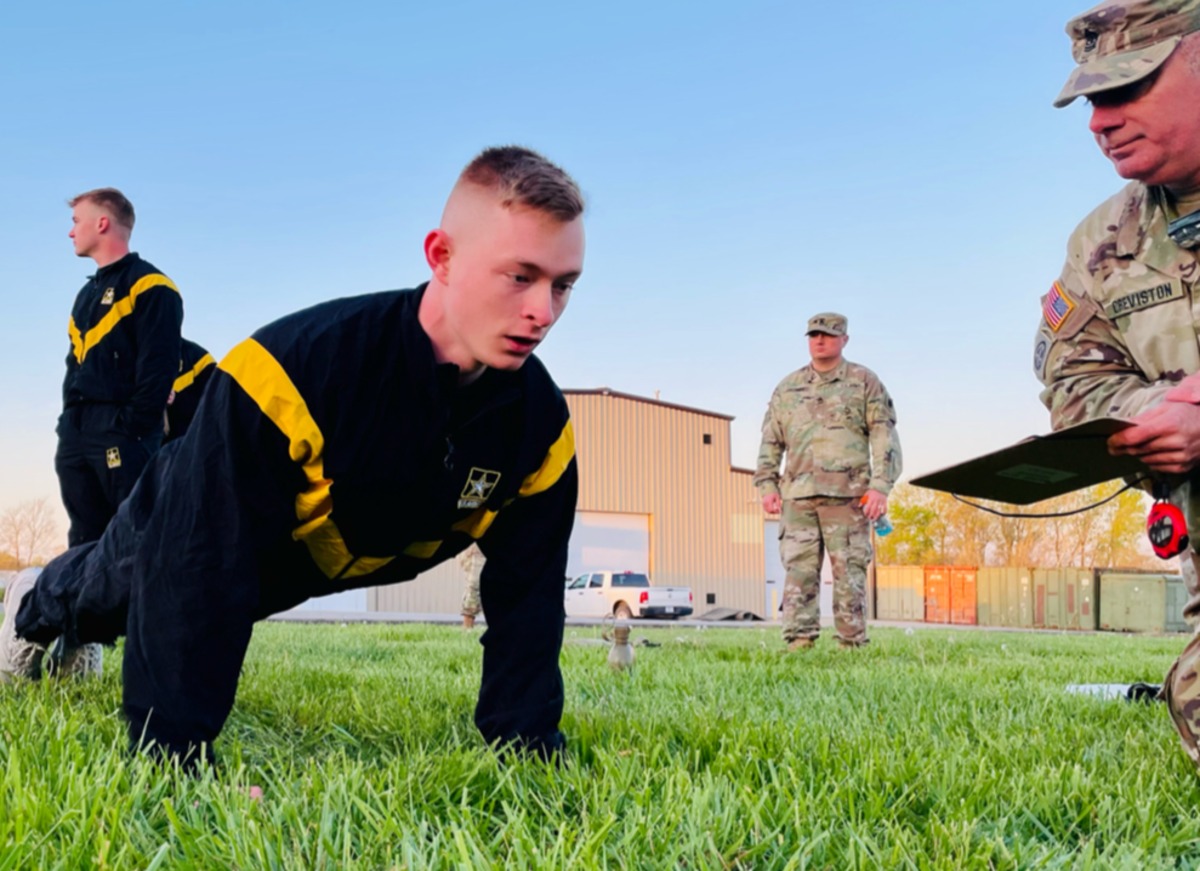
Physical fitness gear for the military sounds mundane — and that’s exactly why it matters. Every active-duty service member across all six branches receives standardized fitness clothing: shorts, shirts, jackets, and other athletic apparel worn during physical training. The Defense Logistics Agency manages that supply chain from end to end, moving hundreds of thousands of individual items annually to bases, ships, training facilities, and forward-deployed units worldwide. When DLA Troop Support issues a contract of this scale, it’s ensuring that the supply chain doesn’t break down — that recruits hitting boot camp have their PT gear, that deployed troops can maintain fitness standards, and that uniform standardization holds across the force.
Karlas and Emmas Knits is a domestic manufacturer with a track record in exactly this space. The Brooklyn-based company, affiliated with Accurate Knitting Corp., has previously supplied military apparel items including face coverings and fitness shirts under DLA contracts. A prior award saw the firm land a $21 million IDIQ for physical fitness shirts for the Air Force and Space Force. Separate earlier contracts covered shorts and other items. The company has been a member of the SEAMS Association, the trade group representing the domestic sewn products industry and U.S. military uniform suppliers — a sector that has worked for decades to keep American apparel manufacturing capacity alive specifically to serve the military’s need for domestically sourced gear.
That domestic sourcing requirement is a consistent feature of military clothing contracts. Under the Berry Amendment, the Department of War generally must procure food, clothing, fabrics, fibers, yarns, and certain other items from domestic sources. That law exists to protect the U.S. defense industrial base from foreign supply chain vulnerabilities — a concern that has taken on renewed urgency given global supply chain disruptions experienced across multiple sectors in recent years. Companies like Karlas and Emmas Knits represent the domestic manufacturing ecosystem that the Berry Amendment was designed to sustain.
The Defense Logistics Agency Troop Support in Philadelphia manages the military’s clothing and textile supply chain, which spans more than 8,000 different items ranging from combat uniforms and boots to undergarments and specialty equipment. Physical fitness gear sits within that broader portfolio, and contracts of this scale reflect the sheer volume of consumption across a force of more than 1.3 million active-duty personnel across all six services. Keeping that supply current, standardized, and domestically sourced is a continuous procurement operation — not a one-time buy.
Karlas and Emmas Knits competing against larger defense contractors and winning a piece of a three-quarter-billion-dollar deal says something about how the DLA’s competitive model works. The agency doesn’t rely on a single supplier for high-volume commodity items. It pre-qualifies multiple vendors, forces them to compete for individual orders, and builds redundancy into the supply chain. For a small Brooklyn manufacturer with deep roots in the military apparel ecosystem, that system creates an opening to grow alongside the Pentagon’s demand — one delivery order at a time.