


- A Ukrainian military expert reported the first detection of a Russian Shahed drone armed with an R-60 air-to-air missile.
- The R-60 missile is intended to target Ukrainian helicopters and light aircraft used to intercept drones.
A Ukrainian military expert says Russia has begun arming its Shahed one-way attack drones with Soviet-designed R-60 air-to-air missiles in an apparent attempt to counter Ukrainian aerial interceptors.
In a statement published by Ukrainian military specialist Serhiy Beskrestnov, known by the callsign “Serhiy Flesh,” confirmed the first documented case of an R-60 missile integrated with a Shahed drone platform.
“Today, for the first time, an R-60 air-to-air missile was detected on a Shahed. This combination is designed to destroy helicopters and tactical aircraft that are hunting Shaheds,” he said.
Beskrestnov did not specify the location where the modified drone was discovered, but described the configuration as intended to counter manned platforms used by Ukrainian forces to intercept Shahed drones.
The upgraded drone was intercepted and shot down by a Ukrainian Sting interceptor drone, with video evidence released by a volunteer group supporting front-line drone operations.
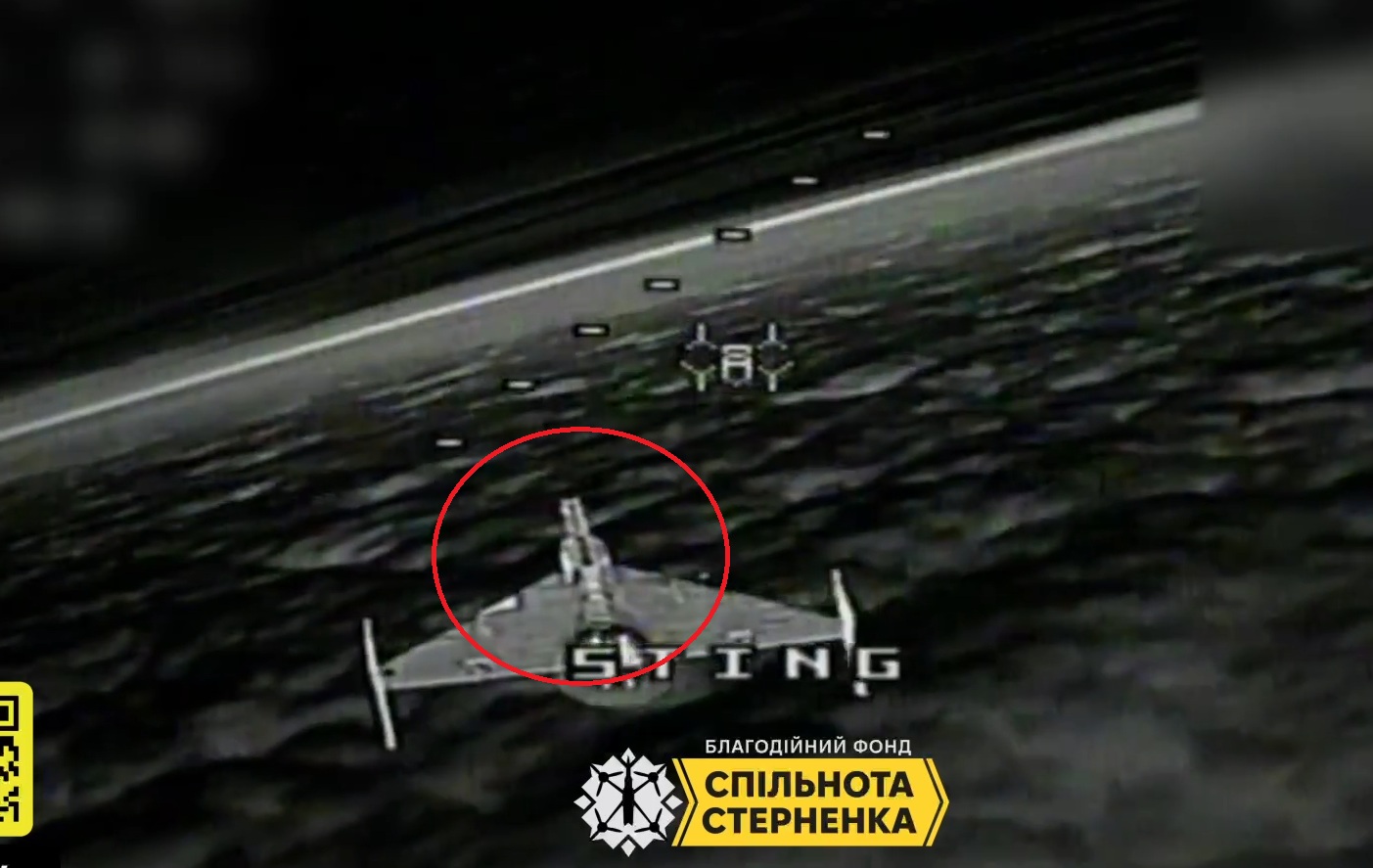
A video of the downed drone was published by the community group associated with Ukrainian activist Serhiy Sternenko. The group raises funds for drone interceptors used to shoot down Russian loitering munitions. The footage clearly shows a Shahed drone outfitted with a missile pylon mounted on its upper fuselage, with an R-60 missile aimed forward in line with the drone’s flight path.
The presence of the pylon and missile configuration suggests a deliberate attempt to convert the Shahed from a one-way attack drone into a dual-role platform capable of engaging aerial threats.
The R-60 (NATO reporting name: AA-8 “Aphid”) is a short-range, infrared-guided air-to-air missile developed in the Soviet Union for close-quarters aerial combat. First introduced in the 1970s, the R-60 was originally mounted on MiG-23 fighter jets. Despite its age, thousands remain in storage or limited service across former Soviet-aligned states.
Adapting these legacy missiles for unmanned platforms represents a tactical shift by Russia in its ongoing air campaign against Ukraine. Until now, Shahed drones have served as kamikaze-style loitering munitions, programmed to strike targets on the ground. Their transformation into aerial weapons platforms capable of targeting helicopters would widen their operational role.
Ukrainian military officials have not yet issued a formal statement on Beskrestnov’s claim, but previous reports have indicated that Ukraine has increasingly relied on helicopters and light aircraft retrofitted for drone hunting missions. The use of fast, maneuverable manned platforms has reportedly improved the interception rate of incoming Shaheds, diminishing the effectiveness of Russia’s nightly strikes.
By attempting to arm drones with air-to-air missiles, Russia appears to be seeking ways to reduce the threat posed by these Ukrainian interceptors.