


The transition from Dassault’s Mirage 2000 fighter jet to the Rafale is accelerating worldwide as nations phase out older fleets in favor of the French company’s most advanced multirole aircraft, Dassault Aviation CEO Éric Trappier told French lawmakers on September 24.
Speaking before the National Assembly, Trappier highlighted that several countries — including India, Qatar, Egypt, Greece, and the United Arab Emirates — are now planning to replace their Mirage 2000 fleets with Rafale fighters.
“The Mirage 2000 is reaching the end of its service life. It is still flying in France, but it will soon stop because we need to transition entirely to Rafale. This is also true for all our export clients, who are moving from the Mirage 2000 to the Rafale,” Trappier said.
The Mirage 2000, once a backbone of many Western-aligned air forces, remains in limited service but is gradually being retired. Dassault and its export customers now view the Rafale as the future, offering far greater multirole capability, advanced avionics, and next-generation combat performance.
However, not all operators are ready to transition immediately. Peru, for example, is expected to announce in October the winner of its competition for 24 new combat aircraft. Rafale is competing against Saab’s Gripen and Lockheed Martin’s F-16 Viper. Rumors have suggested that the Gripen is currently favored, but Lima has made no final decision.
In parallel, Peru’s defense ministry has confirmed the planned purchase of 12 subsonic training aircraft capable of conducting counter-narcotics missions, with deliveries expected to begin in July 2026. Aircraft under consideration include Leonardo’s M345 and M346 and Aero Vodochody’s L-159 Alca.
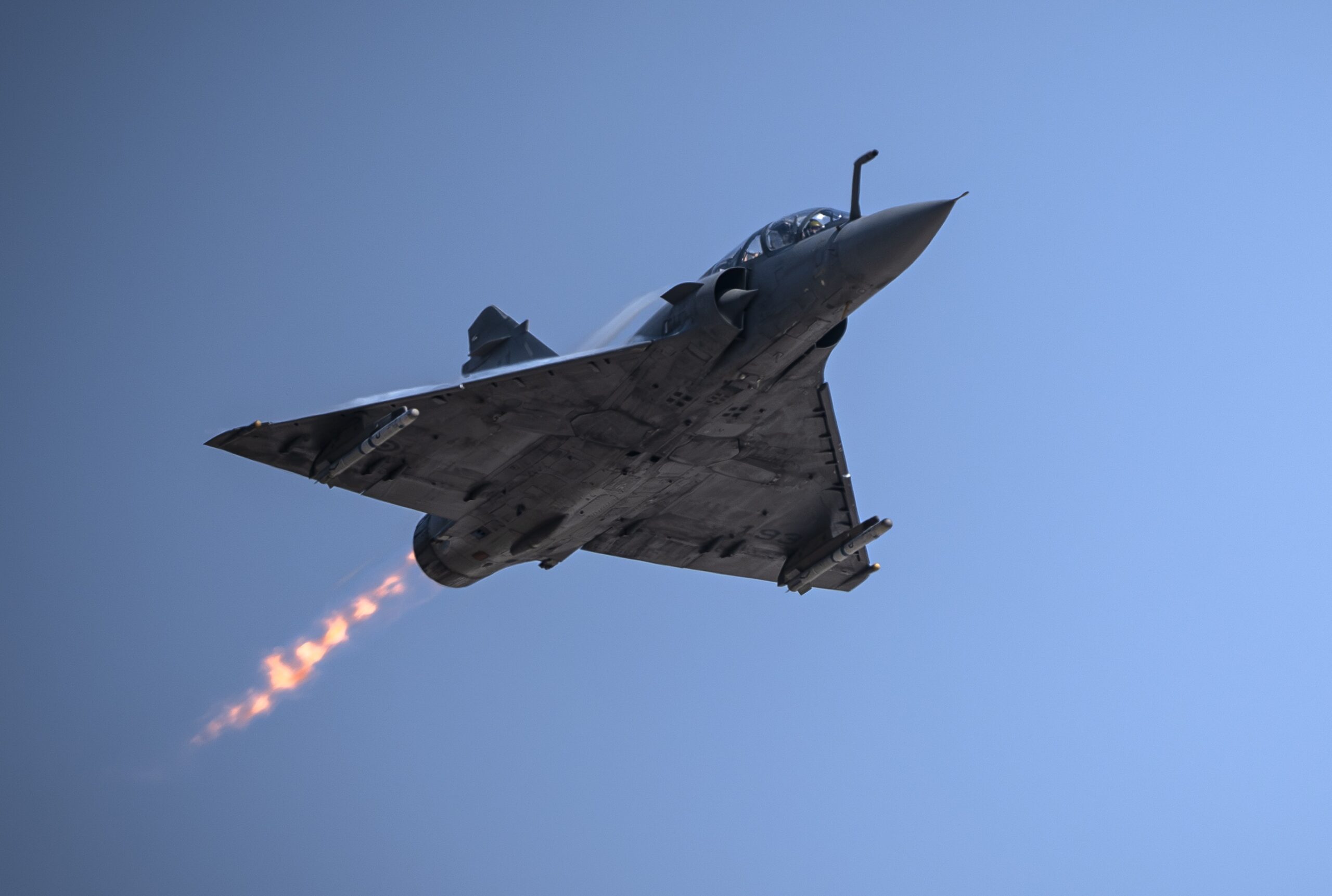
Meanwhile, Taiwan intends to keep its Mirage 2000-5 fighters operational for as long as possible. Acquired in the late 1990s for 20 billion francs, these aircraft remain capable platforms. However, the increasing tempo of Chinese People’s Liberation Army (PLA) operations near Taiwan is making maintenance and sustainment more difficult. In January 2024, Taiwanese media reported that Taipei would allocate €300 million for the purchase of M53 engine parts from Safran Aircraft Engines, alongside two additional support contracts signed discreetly.
Trappier acknowledged the challenges of supporting an aging fleet but said Dassault continues to deliver.
“Even if the industrial dynamics of spare parts and repairs for the Mirage 2000 are slightly declining, Dassault Aviation is still providing excellent support for Taiwan’s aircraft. It is a bit more difficult than before, but we are doing it very well,” he told lawmakers.
Despite this ongoing support, Taiwan’s long-term ambitions are clear.
“You know very well what the Taiwanese want. What they want is the Rafale. But that does not depend on me. I am not saying that selling to Taiwan is good or bad. That is not my responsibility — it is the responsibility of the state,” Trappier said.
Selling advanced military systems to Taiwan remains politically sensitive for France, which has sought to avoid antagonizing Beijing. In 2020, a modest €24 million contract for decoy launchers on Taiwan’s La Fayette-class frigates drew an angry reaction from China.
The geopolitical backdrop intensified in May, when a brief border clash between India and Pakistan saw China launch an information campaign claiming its J-10 fighter, equipped with the PL-15 long-range air-to-air missile, was superior to the Rafale. The Indian Air Force rejected those claims and responded by recommending the acquisition of 114 additional Rafale fighters.