


We decided to speak with Henry Javier Aponte Niño, a Venezuelan-born illustrator now living in Mexico, whose military-themed drawings have flooded social media and found their way to the front lines in Ukraine.
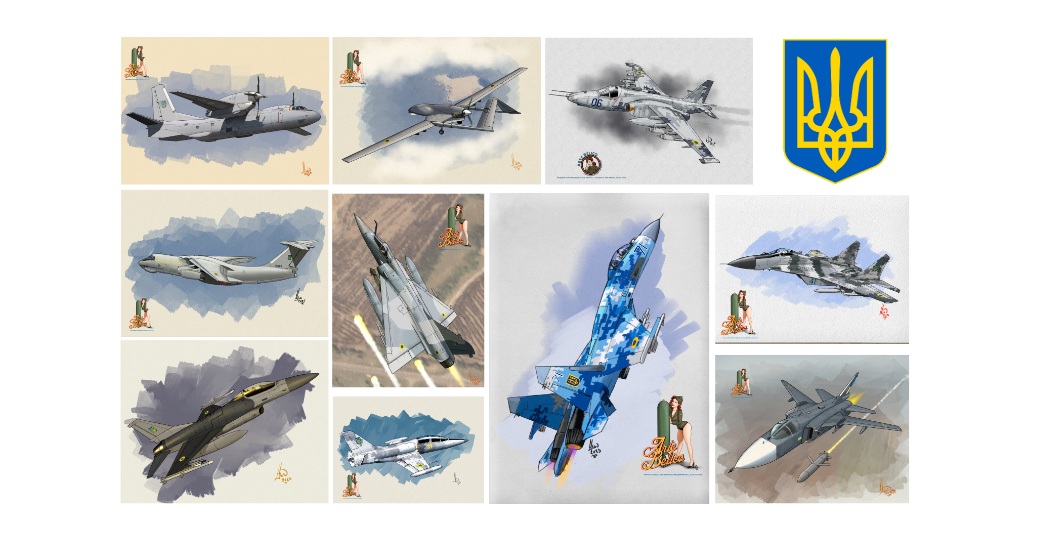
Known under the artistic name Arte-Bélico—translated as “Art of War”—his illustrations have become morale-boosting symbols, appearing on patches sewn to soldiers’ uniforms, decals on armored vehicles, commemorative coins, and even postage stamps.
Aponte’s journey into this unusual profession began with childhood memories of jets roaring above his home. “Since childhood, my life was marked by living near a military air base in Venezuela. F-16s, Mirages, and the old British Canberra bombers often flew over my house. I would run to my father’s encyclopedias to identify them, since at that time there was no internet,” he said.
During the Gulf War of 1990, his fascination deepened. “Newspapers published abundant information and photos of aircraft. With scissors, I began to create a scrapbook for reference. Since I was embarrassed to ask my parents for money to buy scale models, I started drawing them instead,” Aponte explained.
That passion for aviation was cemented by a shocking event in his youth. In November 1992, during an attempted coup d’état in Venezuela, Aponte watched fighter jets conduct strikes over Caracas.
“I saw OV-10 Broncos, EMB-312 Tucanos, Mirages, F-16s, and even a T-2D trainer flying. I observed their maneuvers, the launch of bombs and rockets, and even the downing of an OV-10 Bronco. That experience marked me forever,” he recalled.
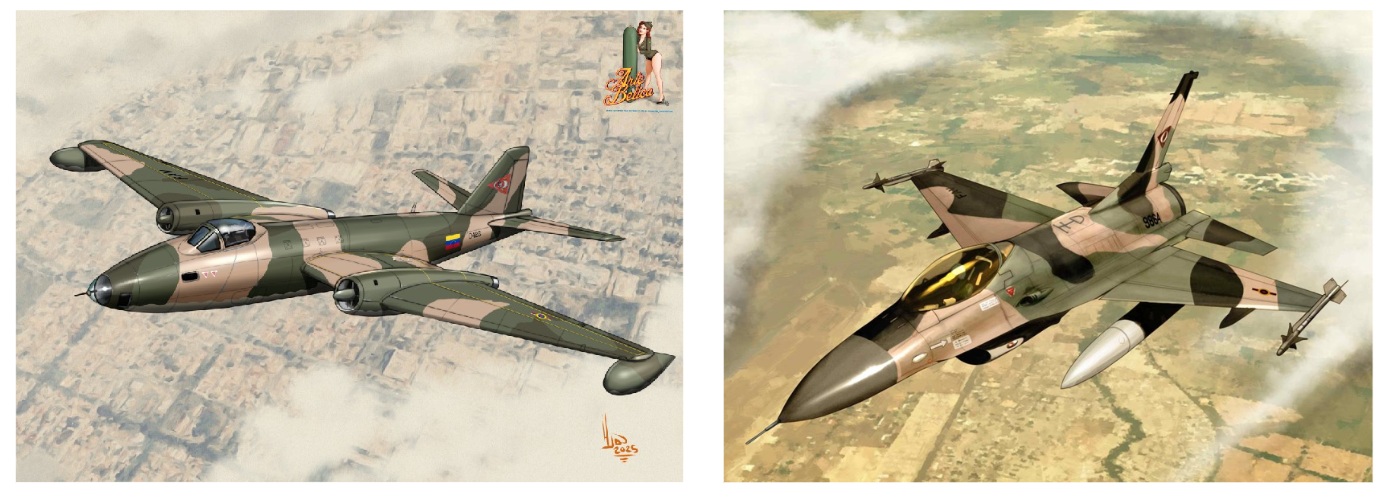
By the 1980s and 1990s, video games such as Falcon and Aces over Europe further pushed him toward aviation art.
Decades later, the illustrator’s work found new meaning in Europe’s largest war since World War II. On February 24, 2022, Russia launched its full-scale invasion of Ukraine. For Aponte, the news was personal.
“On February 24, 2022, when Russia invaded Ukraine, I felt rage and frustration. Although I knew Russia acted like a bully in Eastern Europe, I did not believe it would take that step. That night I did not sleep, watching the news,” he said.
Social media became both an outlet and a battleground.
“Some military blogs blocked me for criticizing their lies, and I lost many followers, but I did not care. In Spanish-language X there was a lot of defeatism, and I confess I was about to give up. Then I saw two videos that changed my perspective,” Aponte explained.
Those clips—Ukrainian fighters shouting defiance at Russian troops—convinced him Ukraine would never surrender.
“I decided to transmit that same energy through my only tool: illustration. Knowing that my drawings are with the Ukrainian troops fills me with pride,” he said.
Among Aponte’s many wartime works, one stands out as his personal favorite.
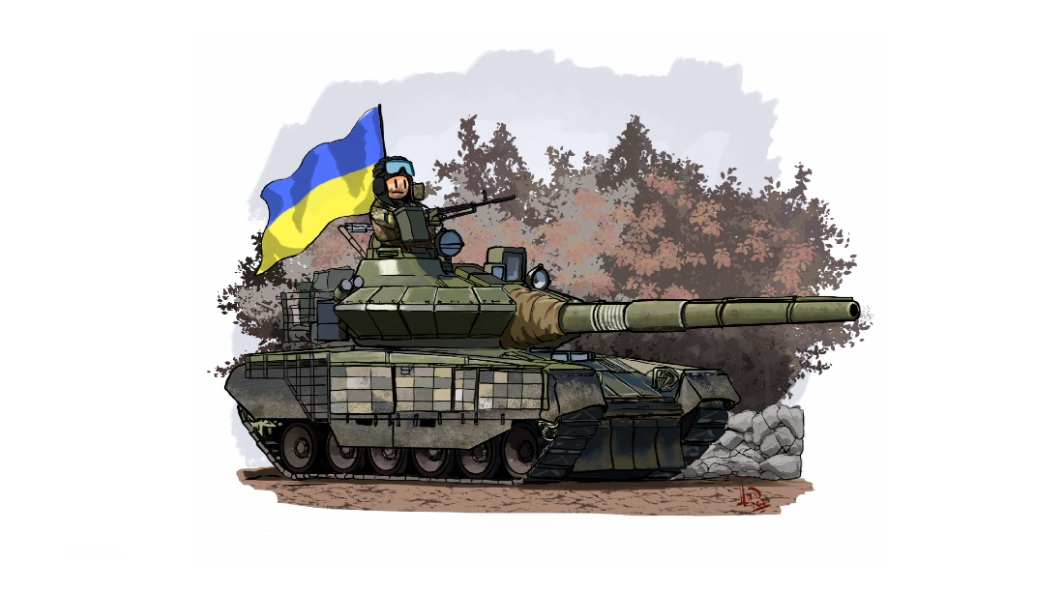
“The work that best represents me, and in fact is my favorite, is the T-80 BVM ‘bunny.’ Its story is spectacular, and it went undefeated,” he said.
But it was another tank drawing that pushed his name into international circles.
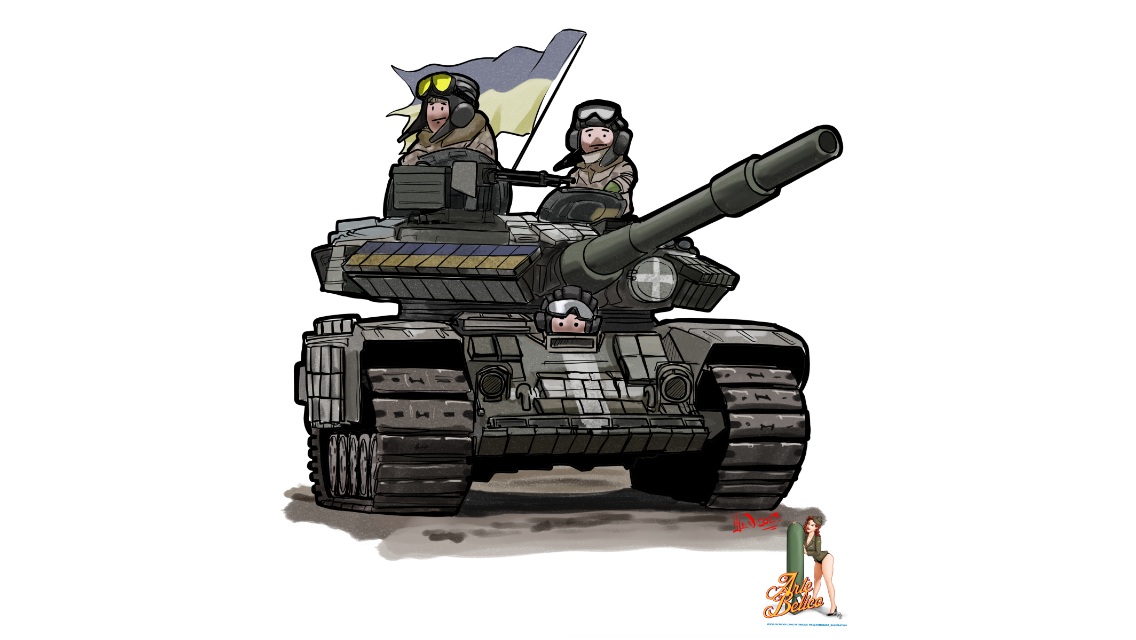
“The one that has been key is this cartoon-style T-64 that I drew at the beginning of 2023. It went viral, and many people asked me for it for printing on labels, T-shirts, and so on. Since I released it, everything exploded, so to speak,” he explained.
His plan is to compile his Ukrainian series into a book to be published once the war ends, intended as a celebration of victory. In addition to armor, his illustrations of Ukrainian aviation have also been widely shared, and he continues updating them as new aircraft arrive on the battlefield.
One design gained special prominence when it was used to support the BRAVE U foundation and signed by Ukrainian heavyweight champion Oleksandr Usyk.
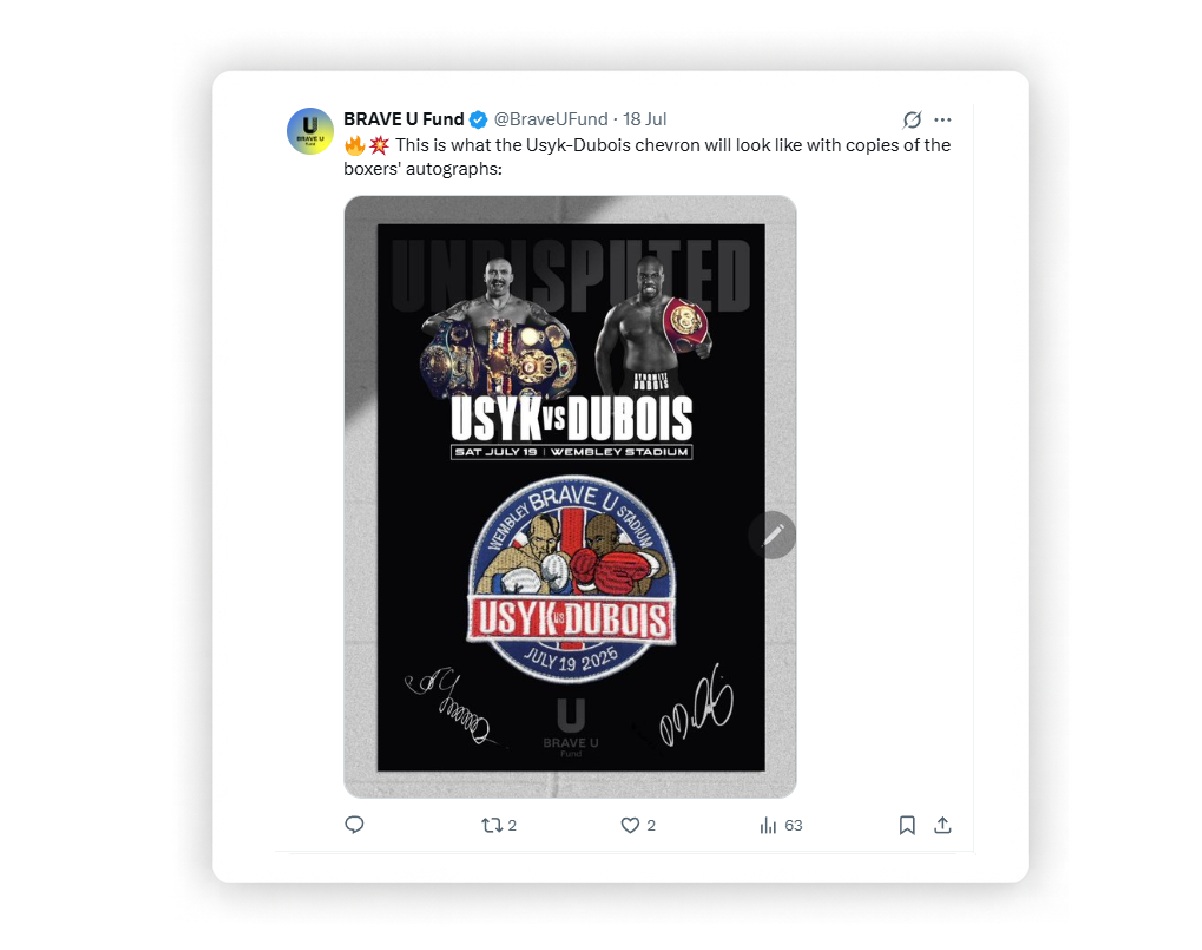
BRAVE U Fund / X, posted on 18 Jul, 2025
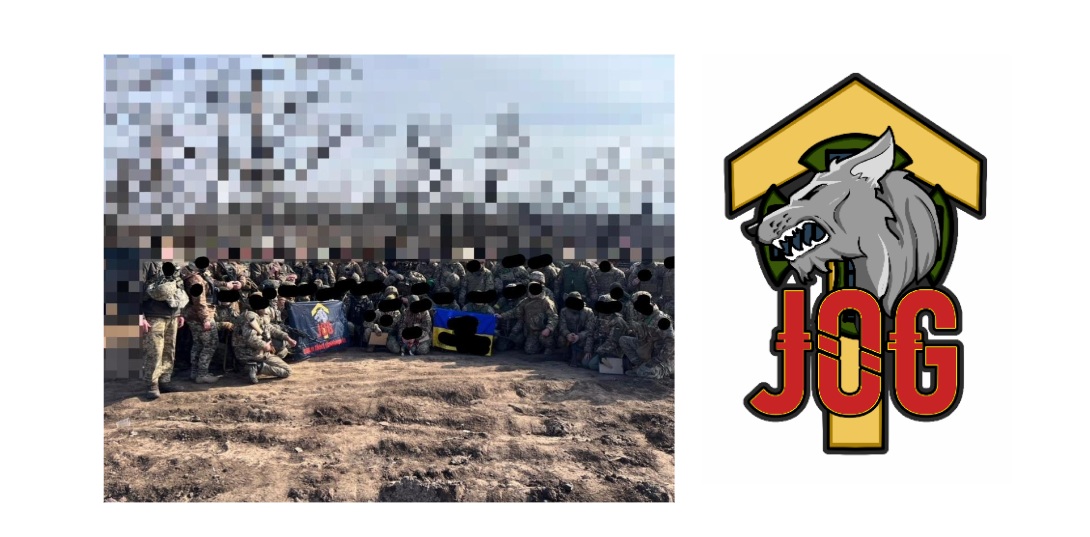
Alongside recognition have come painful reminders of the war’s cost. Aponte recalled being asked to design a patch for a Ukrainian assault unit. Because of workload delays, he submitted it later than planned. By then, he learned the unit had been decimated in combat.
“That impacted me deeply, and since then I prioritize requests for the front,” he said.
He insists that he does not profit from the Ukrainian war effort.
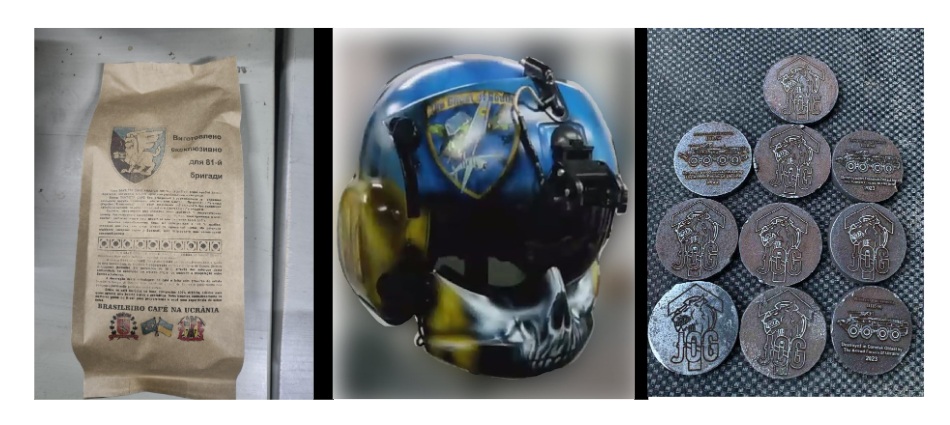
“An important fact: I do not charge for works destined for Ukraine, and if someone pays me, it is by their own decision or to support me,” Aponte noted.
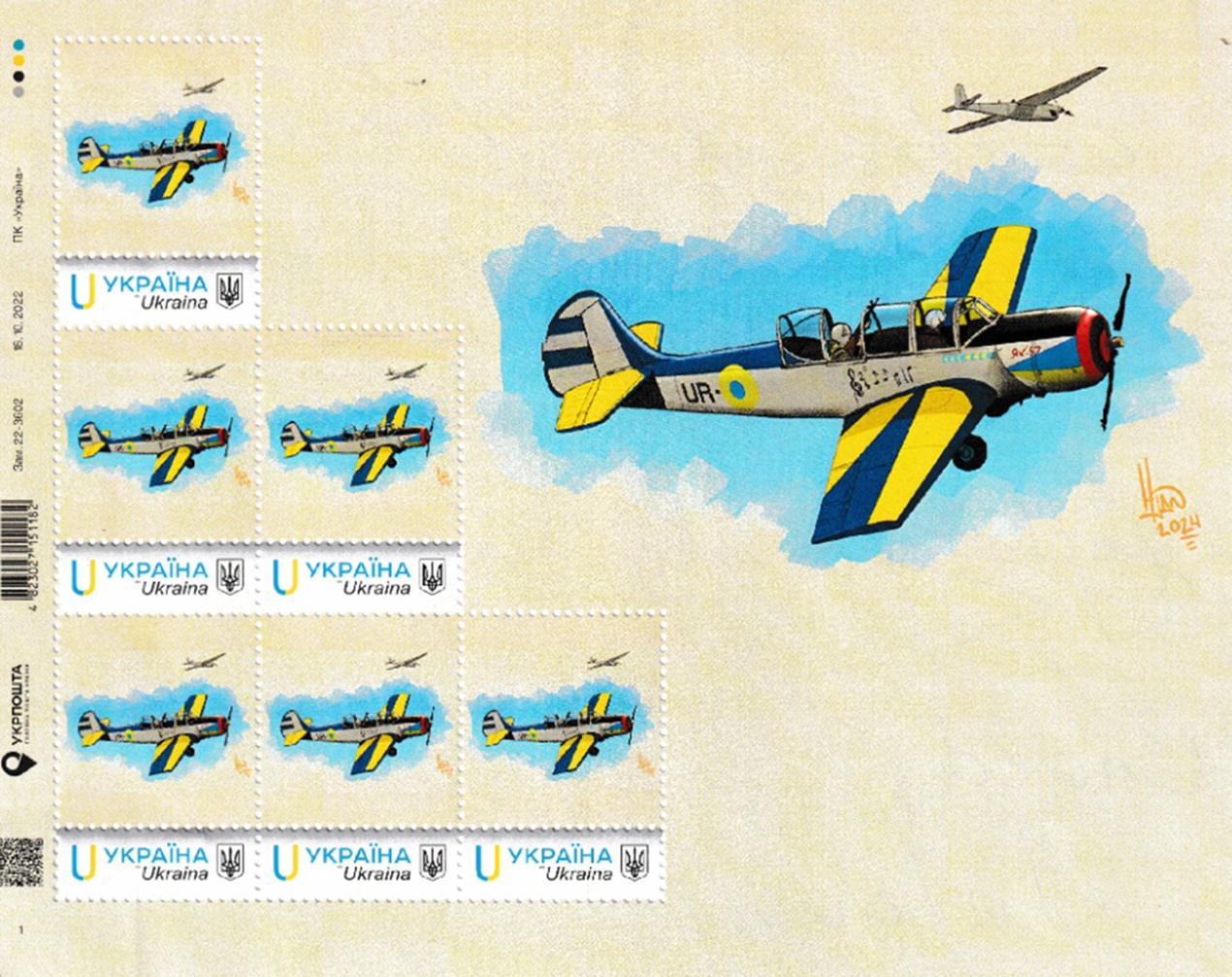
Despite international recognition, he faces challenges that have little to do with combat.
“Piracy is a big problem for artists. Sources of work for illustrators are limited, and many of us depend on publishing books with our works. However, when these books reach the internet, piracy distributes them without control, sales fall, and artists face economic difficulties,” he said.
This has made him hesitant to publish a comprehensive collection of his work.
Artificial intelligence presents another threat. “AI has flooded platforms like Pinterest, DeviantArt, and ArtStation with generated images, making it difficult to find real references. It is impossible to compete with the speed of AI, although humans are still superior in quality,” Aponte explained.
He compared illustrators’ plight to musicians on the Titanic, playing on while the world ignores their struggle.
Before the Ukraine war, Aponte’s drawings had already appeared in books on military history, science fiction, and tabletop wargames, including long-term contributions to Scouts Out: Raids and Reconnaissance in 1914–1918. Today, however, his works carry weight far beyond gaming tables. They are present in trenches, worn by soldiers, and shared online across continents.
“Knowing that my work, even if only in a small way, helps to raise the morale of Ukrainian troops gives me immense joy and pride,” he said.
Henry Javier Aponte Niño’s path from a boy sketching jets in Venezuela to an illustrator whose works now accompany soldiers in Ukraine reflects the strange intersection of war and art in today’s world. His drawings have become symbols of defiance, reminders that creativity can carry weight even on the battlefield.
For him, this is not about fame or financial gain. It is about solidarity with a country under siege. “Knowing that my work, even if only in a small way, helps to raise the morale of Ukrainian troops gives me immense joy and pride,” Aponte said.
In the trenches, on the sleeves of uniforms, and across social media, his illustrations tell a story of resilience. What began with fighter jets over Caracas skies now lives on in Ukraine’s struggle for survival—art that has become part of a nation’s fight.