

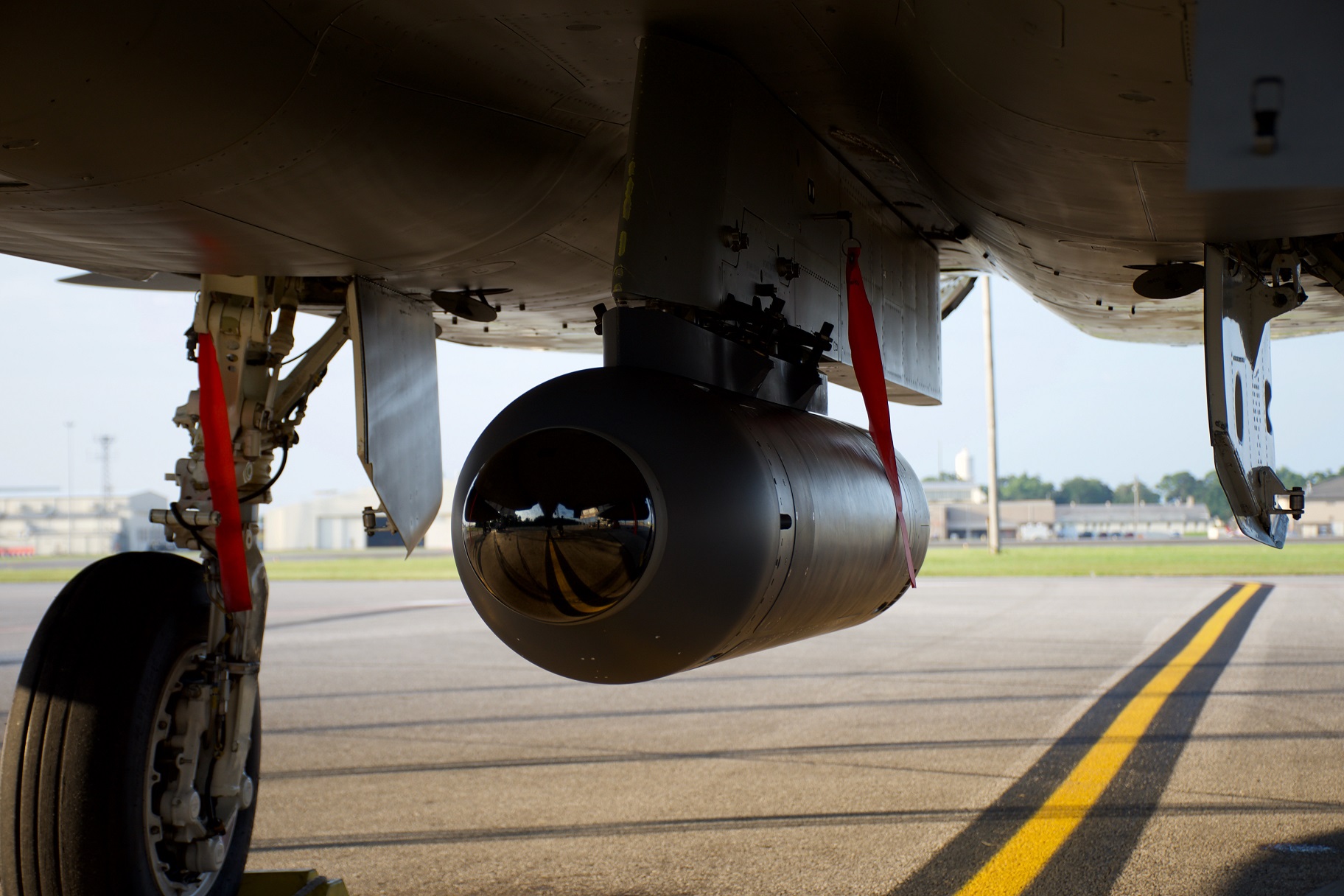
In a statement Tuesday, the Air Combat Command said the latest version of U.S. Air Force’s long-range sensor incorporating infrared and other sensor technologies for targeting, known as the Legion Pod, reached initial operating capability on the F-15C Eagle fighter jet.
The Legion Pod is a sensor that uses the infrared spectrum to help pilots to track and engage enemy aircraft in environments, where traditional radar technology is denied. The pod also provides a way of monitoring enemy aircraft from extended ranges that normally go undetected, boosting the effectiveness of the F-15C and its ability to dominate the battlespace.
“In today’s warfighting environment, not only do we have the capability and technology to jam and counter radar, but our enemies do, too,” said Maj. Daniel Hermanski, ACC’s F-15 requirements branch chief. “This pod is the next step for countering jamming technology and allowing our warfighters to fight and track the enemy in contested environments.”
According to Lockheed Martin, the Legion Pod can accommodate additional sensors within its structure, making the task of integrating new capabilities possible with minimal aircraft modifications. The versatility and adaptability of the pod design provides for integration on other fighter aircraft such as the F-16 and F-15EX.
“It’s a game-changer,” said Todd Mathes, ACC’s F-15C program element monitor. “The capabilities this pod provides are critical to the way we provide combat power and keeps us at the leading edge of the fight.”
As the lead major command for all fighters, ACC is responsible for equipping the fighter force regardless of whether they own the unit operationally. Reaching IOC on this pod is an example of ACC’s continued collaboration with fighter units across the Air Force and the test and evaluation squadrons at Eglin Air Force Base, Florida and Nellis Air Force Base, Nevada.
“We work closely with our Air Force and industry partners to identify and eliminate gaps in our capabilities, which our enemies would attempt to exploit,” said Mathes. “This allows us to field and test new technologies to determine the best fit to give us an edge in battlefield decision making.”
The Legion Pod is projected to reach full operational capability later this year as the remaining contracted pods are delivered to tactical F-15C squadrons.